Karate at the 2026 Asian Games: What Aichi-Nagoya Showed
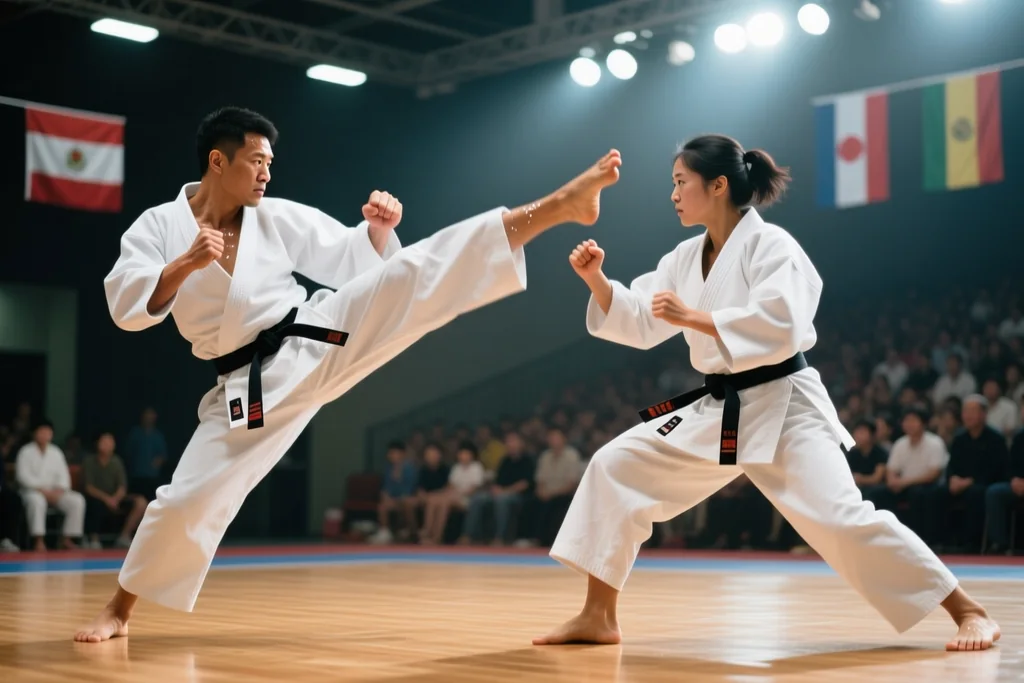
Karate at the 2026 Asian Games ran for four days in Aichi-Nagoya, Japan, on the tatami of the Toyohashi City General Gymnasium. The host nation staged both kata and kumite, and the medal spread across the four sessions told a story about depth rather than domination.
The karate Asian Games 2026 results deserve a close read, because they arrived at an uncertain moment for the sport. Olympic inclusion ended after Tokyo 2020, and Los Angeles 2028 will not feature karate at all. Every continental result now carries extra weight.
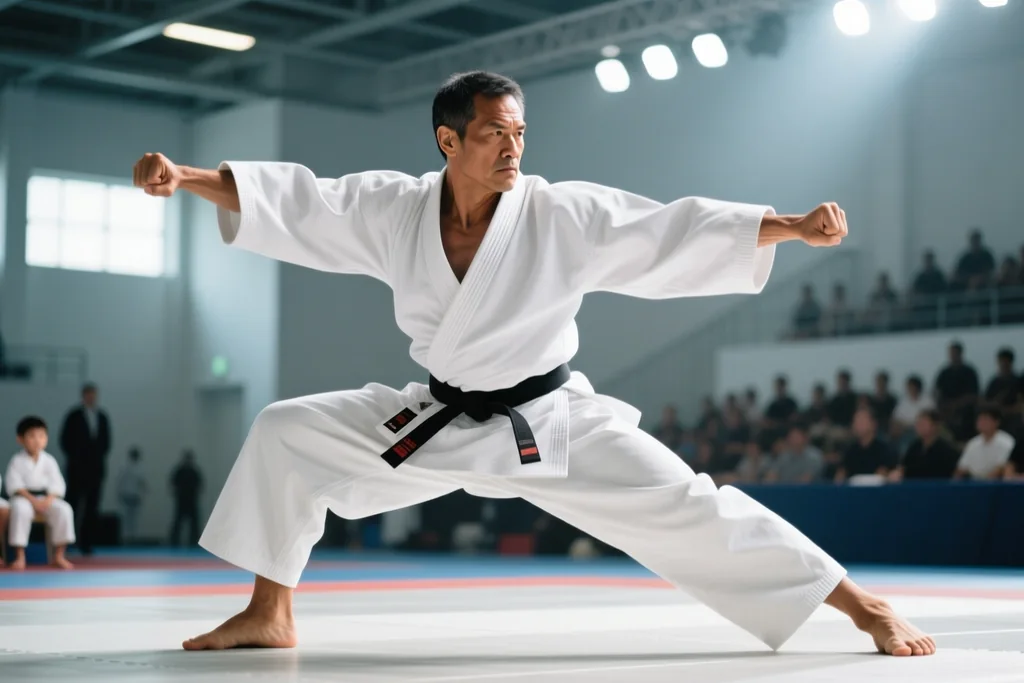
Four Days in Toyohashi
Karate at the 2026 Asian Games ran from September 20 to 23, 2026, at the Toyohashi City General Gymnasium in Aichi Prefecture. Organizers kept the schedule tight, with elimination rounds and finals sharing the same floor across four sessions.
Both branches of the sport were contested. Kata, the set forms judged on posture, balance, and precision, shared the program with kumite, the free-fighting discipline scored on clean and controlled techniques.
Team kata added a separate challenge, because judges score synchronization along with technique. A single hesitation in a three-person form is visible to every official on the panel.
Day Two Put Japan, Uzbekistan, and China on Top
The second day, September 21, delivered a home gold when Kakeru Nishiyama finished first in his bracket. Japan had waited through the opening session for a title, and the win settled the crowd.
Uzbekistan answered with Abdul Vakhkhob Rashidov, whose gold confirmed a steady rise in that country's senior program. His result was no longer an upset by the end of the week.
China doubled up in the same session. Li Gong and Qiaoqiao Li each won a division, giving the Chinese squad two titles on a single day.
Day Three Belonged to Vietnam in Team Kata
Vietnam's women won the team kata title on September 22, the strongest single result of the third day. Team kata rewards clean repetition, and the Vietnamese group held its lines from the opening bow to the closing movement.
Morteza Nemati added another gold to the day's tally, and Mohammad Aljafari followed with a win of his own. Two more federations left the floor with a title.
Adeola Fay Robert closed the session, and her gold underlined how far the karate Asian Games 2026 field reaches beyond the traditional powerhouses.
The Final Golds and the Meetings Around the Games
The closing session on September 23 handed the remaining titles to Kuwait's team, Mahmoud Nemati, and Shahmalarani Chandran. Kuwait's squad win capped four days of consistent scoring in the team events.
Away from the tatami, WKF President Antonio Espinós met Seiko Hashimoto, president of the Japanese Olympic Committee, between September 24 and 27, 2026. The talks came after the competition itself had finished.
Espinós also met Soraya Aghaei, a member of the IOC Athletes' Commission, and Kazakhstan's Minister of Sport and Tourism, Yerbol Myrzabossynov.
Meetings like these rarely produce headlines, but they shape the calendar. Federations use them to line up hosts, funding, and future event slots.
The Medal Spread at a Glance
Karate Asian Games 2026 gold went to Japan, Uzbekistan, China, Vietnam, and Kuwait, five federations in four sessions with no single dominant squad. The table below collects the headline results.
| Detail | Fact |
|---|---|
| Dates | September 20–23, 2026 |
| Venue | Toyohashi City General Gymnasium, Aichi, Japan |
| Disciplines | Kata and kumite, including team kata |
| Day two golds | Kakeru Nishiyama, Abdul Vakhkhob Rashidov, Li Gong, Qiaoqiao Li |
| Day three golds | Vietnam (women's team kata), Morteza Nemati, Mohammad Aljafari, Adeola Fay Robert |
| Final day golds | Kuwait (team), Mahmoud Nemati, Shahmalarani Chandran |
| Next senior events | Karate 1 Series A Salzburg, October 2–4; Karate World Cup Hangzhou, November 20–22 |
Read down those rows and a pattern appears. Japan, Uzbekistan, China, Vietnam, and Kuwait each converted long preparation into medals, while the team events rewarded federations that train squads rather than individuals.
Team titles follow their own logic. An individual medal depends on one athlete's day, while a squad result depends on repeated accuracy across a whole roster. That is harder to build and harder to fake.
Karate's Road Without the 2028 Games
Karate appeared at Tokyo 2020 but is absent from the Los Angeles 2028 program. That decision pushed federations to treat their own competitions as the main stage instead of a rehearsal for the Olympics.
The Karate 1 series and the continental championships now carry the weight that Olympic qualification once carried. National teams plan seasons around them, and athletes build rankings that exist for their own sake.
Two senior events follow the Asian Games almost immediately.
- Karate 1 Series A in Salzburg, Austria, from October 2 to 4, 2026.
- Karate World Cup in Hangzhou, China, from November 20 to 22, 2026.
Both draw the same athletes who competed in Toyohashi, which means the form shown in Japan will be tested again within weeks.
What Four Days in Toyohashi Left Behind
Four days in Aichi-Nagoya did not settle who owns Asian karate. They showed how many federations can now win, and a wide podium is a healthier sign than a short list of repeat champions.
For a club, the useful lesson is narrower than any medal table. Kata and kumite are trained together, judged on different terms, and both punish sloppy fundamentals without mercy.
Kenpo practitioners in a small American school will never stand on that floor. The standard visible over those four days still describes what correct repetition looks like across years, and that is worth copying.